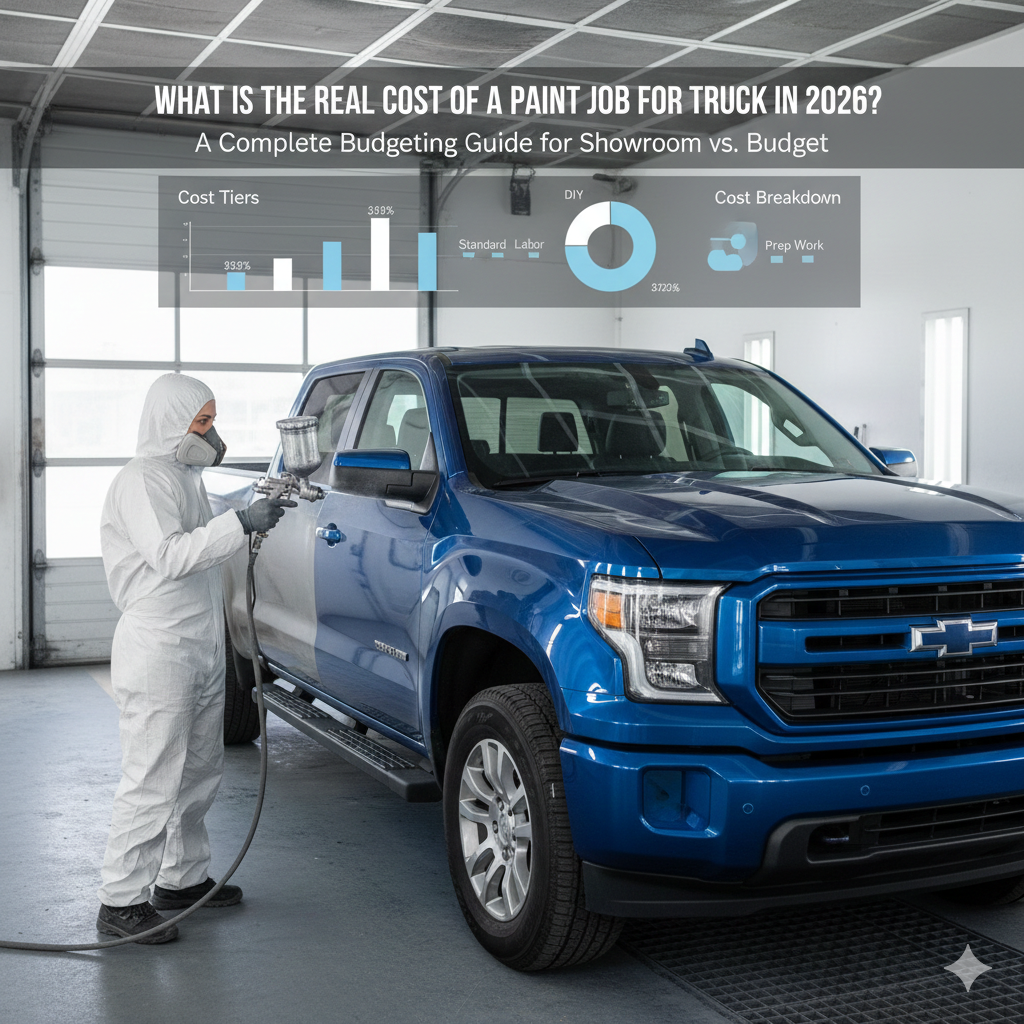
Whether you’re restoring a classic F-150 or refreshing a work-worn Silverado, the question is always the same: How much is this going to cost?
Unlike a compact car, a truck presents a massive surface area with complex body lines, deep beds, and heavy-duty tailgates. In 2026, labor rates and material costs have shifted, making it essential to understand the different "tiers" of truck painting.
2026 Price Breakdown: Truck Paint Tier List
| Service Level | Estimated Cost | What You Get |
| DIY Project | $200 – $600 | Supplies only (sandpaper, primer, enamel). High effort, variable results. |
| Basic (Economy) | $800 – $1,500 | Single-stage synthetic enamel. Minimal prep. Good for work trucks. |
| Standard (Pro) | $2,500 – $5,000 | Two-stage (base + clear). Full sanding and minor dent repair included. |
| High-End / Custom | $6,000 – $15,000+ | Showroom quality. Multi-stage pearls, ceramic clears, or full color changes. |
The "Big Three" Factors That Drive Your Quote
1. The Size and Configuration of the Truck
A regular cab, short-bed truck will always be cheaper than a crew cab dually. Larger trucks require up to 50% more material and significantly more labor hours for masking and sanding. If you have a canopy or a tool box that needs matching, expect the price to climb.
2. Prep Work: The Hidden Cost
The actual spraying of the paint takes the least amount of time. The real cost of a paint job for a truck lies in the prep.
-
Rust Remediation: Sanding down to bare metal to stop oxidation.
-
Body Fillers: Smoothing out the "dings" from years of use.
-
De-trimming: Removing handles, lights, and mirrors for a seamless look.
3. Type of Paint & Finish
In 2026, Urethane is the industry standard for durability. However, if you want a Matte or Satin finish, be prepared to pay a premium. These finishes require specialized application techniques and cannot be "buffed out" if a mistake is made, meaning the painter has to be perfect the first time.
Professional vs. DIY: Is it Worth It?
While a $500 DIY job sounds tempting, trucks are difficult to paint without a professional booth. Dust, wind, and bugs can ruin a wet coat instantly.
-
The Pro Advantage: Most shops offer a 3–5 year warranty against peeling and fading.
-
The DIY Risk: Without the right HVLP (High Volume Low Pressure) sprayer, you may end up with "orange peel" texture or uneven coverage.
Conclusion: Is a New Paint Job Worth the Investment?
If you are planning to sell your truck, a fresh, standard-tier paint job can often increase the resale value by more than the cost of the service itself. For sentimental restorations, moving into the high-end tier ensures your truck stays protected from the elements for another decade.