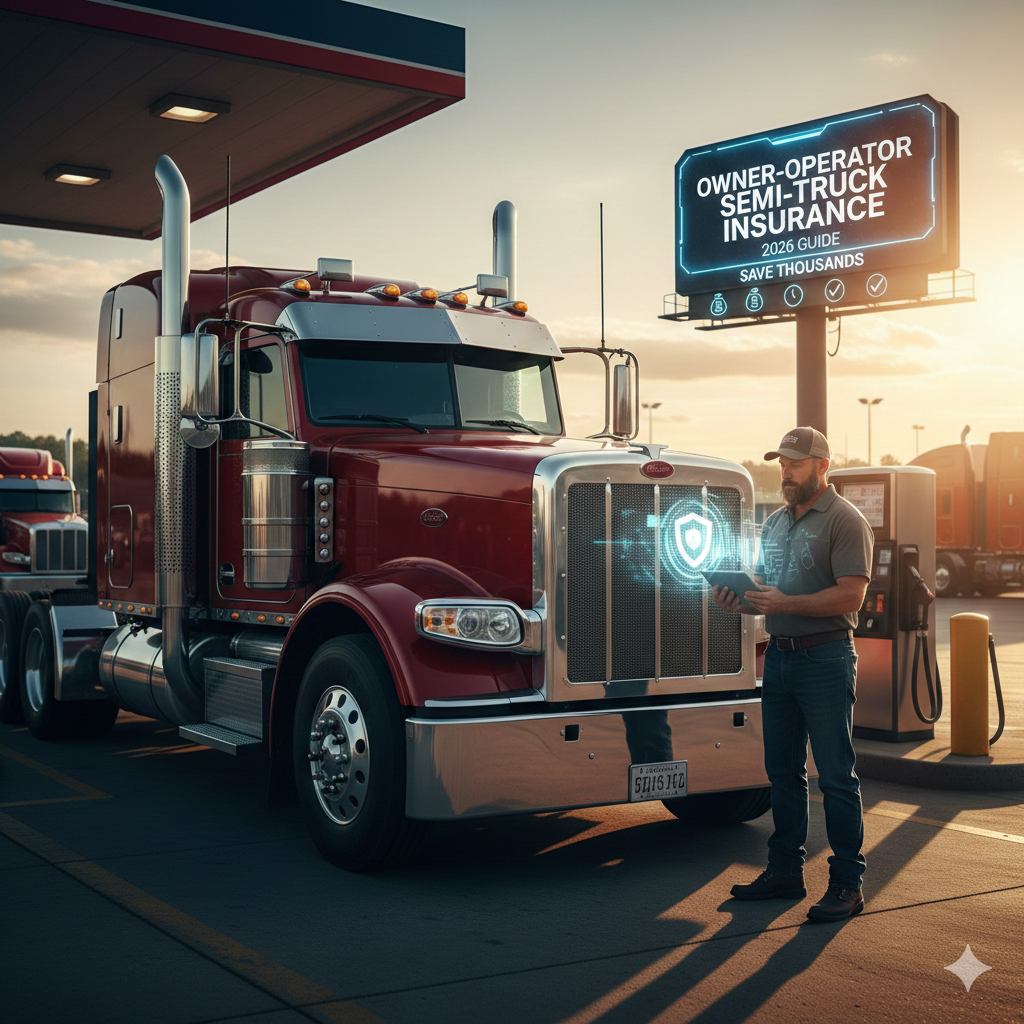
The Owner-Operator’s Guide to Semi-Truck Insurance (2026)
Starting or maintaining a trucking business requires more than just a CDL and a rig. You need a safety net that satisfies federal regulators, brokers, and your own bank account. Whether you operate under your own authority or are leased to a carrier, here is everything you need to know about insuring your semi-truck.
1. Essential Coverage Types
Not all insurance is created equal. Depending on your business structure, you will need a specific mix of the following:
-
Primary Liability: This is the bedrock of your policy. It covers bodily injury and property damage to others if you are at fault in an accident.
-
Non-Trucking Liability (Bobtail Insurance): If you are leased to a carrier, they usually cover you while you're under dispatch. Non-trucking liability covers you when you're using your truck for personal reasons (like driving to the grocery store) without a trailer.
-
Physical Damage: Covers the cost of repairs to your own truck resulting from collisions, fire, theft, or natural disasters.
-
Motor Truck Cargo: Brokers won’t even look at you without this. It protects the freight you're hauling from damage or theft.
-
General Liability: Protects your business from "off-road" risks, such as someone slipping and falling at your office or a mistake made during a delivery that doesn't involve the truck itself.
2. Mandatory FMCSA Requirements
The Federal Motor Carrier Safety Administration (FMCSA) has strict minimums to keep your MC number active.
| Cargo Type | Minimum Coverage Required | Industry Standard (Recommended) |
| Non-Hazardous Freight | $750,000 | $1,000,000 |
| Hazardous Materials | $5,000,000 | $5,000,000+ |
| Household Goods | $300,000 | $1,000,000 |
Pro Tip: While the legal minimum for general freight is $750,000, most brokers and shippers require $1 million in liability before they will award you a load.
3. How Much Does It Cost in 2026?
Insurance premiums have shifted in 2026 due to increased use of telematics and inflation in repair costs. On average:
-
New Authorities: Expect to pay between $12,000 and $20,000+ per year. Since you lack a "safety score" history, insurers view you as a higher risk.
-
Established Operators (3+ Years): Premiums typically drop to $9,000 – $14,000 per year.
-
Leased Operators: Because the carrier handles the primary liability, your "add-on" coverage (Bobtail, Physical Damage) usually costs between $3,000 and $5,000 per year.
4. Ways to Lower Your Premiums
You don't have to accept a high quote as a final answer. Here is how to fight back against rising costs:
-
Leverage Telematics: In 2026, many insurers offer discounts if you share your ELD (Electronic Logging Device) data to prove safe driving habits.
-
Increase Your Deductible: Moving from a $1,000 to a $2,500 deductible can significantly lower your monthly payment—just ensure you have that cash set aside in an emergency fund.
-
Maintain a Clean MVR: Your Motor Vehicle Record is the first thing underwriters look at. Avoiding even minor "speeding" or "following too closely" tickets can save you thousands.
-
Pay in Full: Many carriers like Progressive or OOIDA offer a 10% to 15% discount if you pay the annual premium upfront rather than monthly.
Conclusion
Owner-operator semi-truck insurance is one of your largest fixed costs, but it’s also your most important investment. By understanding the difference between what’s required by law and what’s required by your customers, you can build a policy that keeps you compliant and profitable.